
The Student List won the election in Serbia! A victory that shows young people are a force to be reckoned with. The result ends more than a decade of SNS dominance under the rule of President Aleksandar Vučić and signals a strong demand for transparency, democracy, and justice. It also proves that young people can organize, challenge the establishment, and win without compromising their values. The Student List’s success is already inspiring young activists around the world.
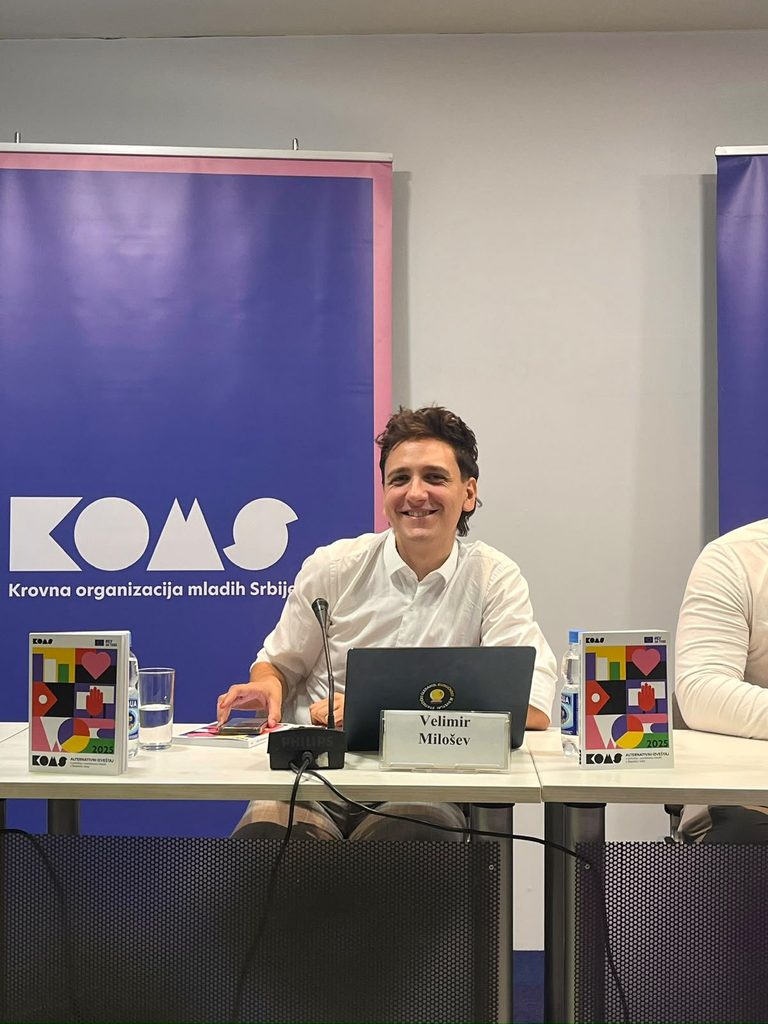
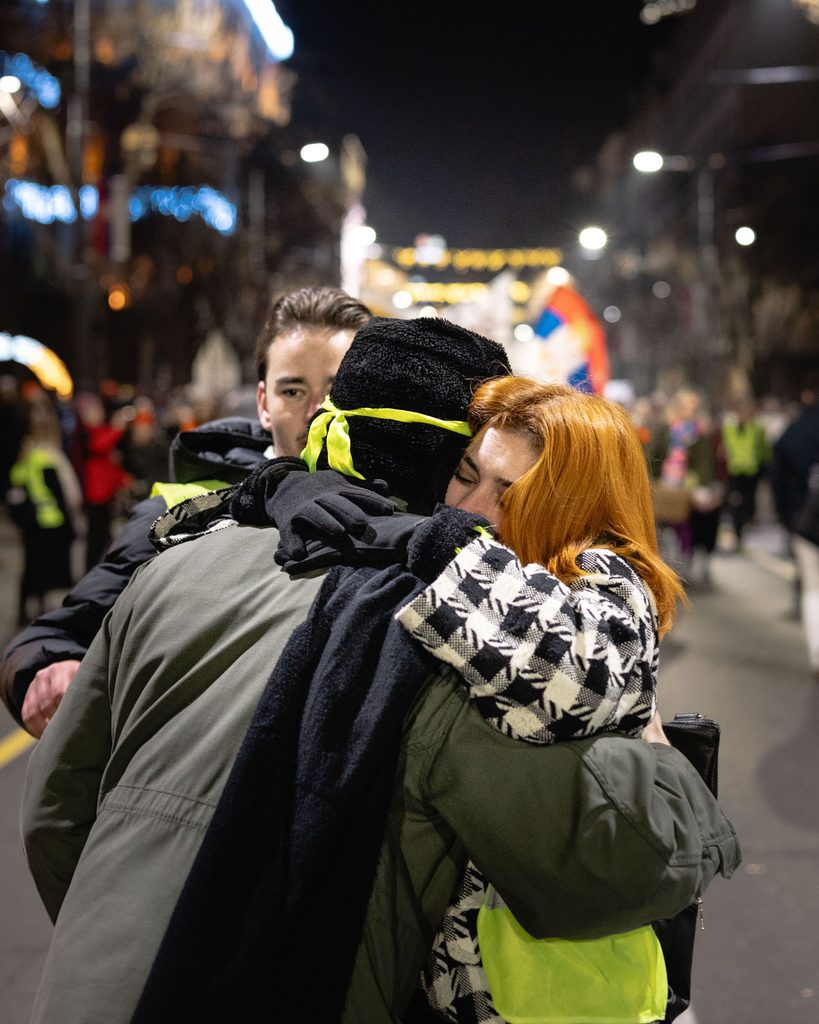
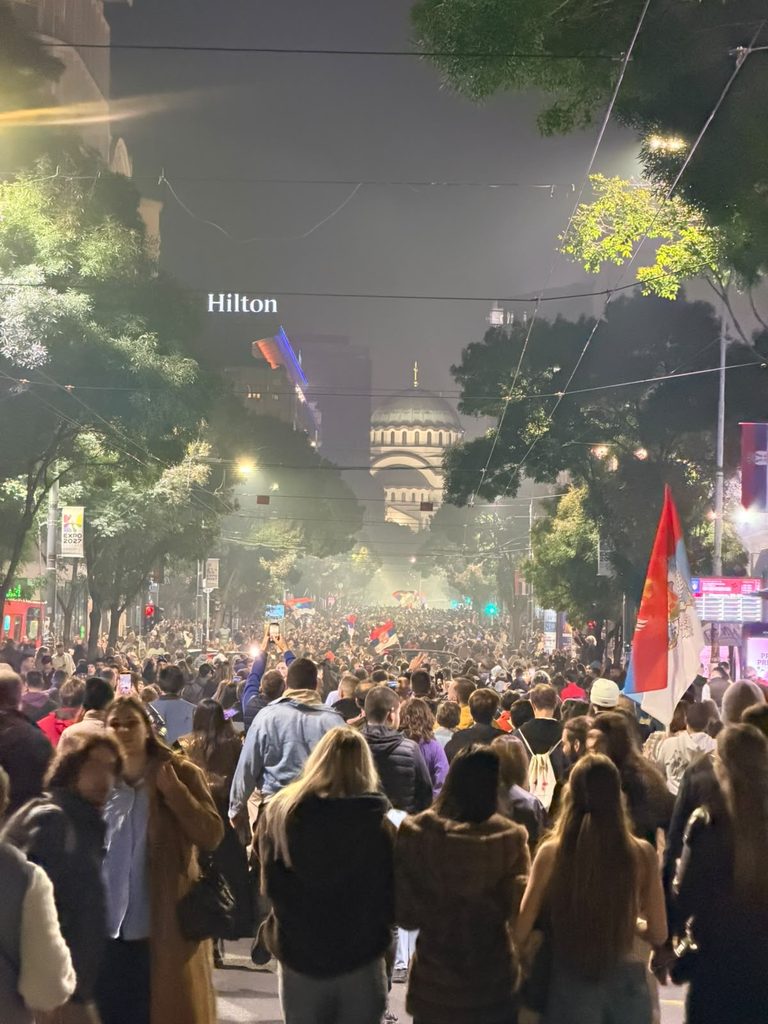
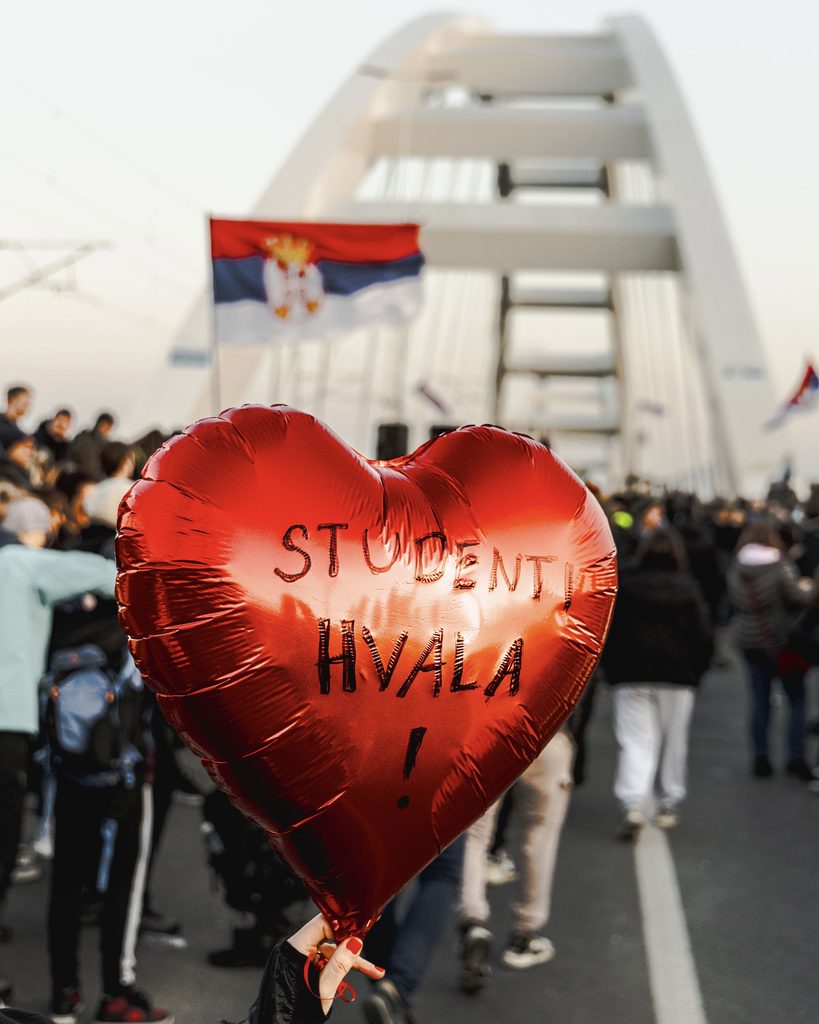
Photo: KOMS & Andjela Radojičić
”In short, young people took matters into their own hands, reclaimed the public good and ensuring Serbia can be a dignified place to live in.”
Left International Forum and the National Youth Council of Serbia (KOMS), in Serbia have an ongoing collaboration. Velimir Milošev, President of the Governing Board of KOMS, shares his views on recent developments and election turn out in this interview.
What has Gen Z mobilisation meant for Serbia?
– In two years, youth have transformed Serbia in unimaginable ways. Out of a tragedy that occurred on November 1st 2024 at the Novi Sad train station that took away 16 lives, youth mobilised through the student movement seeking justice and accountability. As the authorities reacted with violence and hate, youth answered with historically high participation, lead by principles of justice, solidarity, equality and non-violence. At a time of exclusion of citizens from decision making, youth practiced direct democracy through student plenaries, inspiring others to organise in citizen assemblies (zborovi). Instead of electing one leader who will act as if they’re above all, the student movement was leaderless from the start and will continue acting as such. Youth organizations meanwhile gave support to this mobilisation, risking their ability to operate as repression became ever-present. In short, young people took matters into their own hands, reclaimed the public good and ensuring Serbia can be a dignified place to live in.
What do these election results mean for young people in Serbia over the next few years?
– These historic elections show that young people became the strongest political actor in Serbia. When older generations lost hope, youth showed a path forward, breaking away from the 40 years of post-transition legacy of corruption, authoritarianism and deep societal divisions, creating a movement that united Serbia under the idea of all being equal before the law — what we call constitutional patriotism. This means reprogramming our society to operate based on the rule of law, instead of clientelism and nepotism.
What do you think that these developments and growing engagement in democratic processes mean for the future of youth participation?
– As the task of rebuilding Serbia and its institutions starts, we must keep up the momentum. Young people are extremely motivated to continue working, and we’ve already seen amazing initiatives pop up in the days since the election, such as the Student List calling for people to repaint hate graffiti and replant green surfaces across our communities. The task for all will be to ensure this momentum is kept by systemic ways of channeling this motivation into impacting official government decision-making processes, ensuring youth in are rightfully included as equal partners in governance for years and decades to come. Reclaiming the public good will bring back the trust in institutions that has only declined in the last ten years since KOMS has been measuring it through our Alternative Report on the Position and Needs of Youth. Additionally, now our task will be to use this momentum to turn state’s systemic repression of youth into systemic care for young people.
”Now our task will be to use this momentum to turn state’s systemic repression of youth into systemic care for young people.”
What kind of expectations and responsibilities do you see come with these developments?
– The responsibilities are immense for all of us fighting for a democratic, rules-based Serbia. For KOMS, part of this will be to rethink our youth policies — to continue our long-standing mission of building systemic care of young people and dismantling the systemic repression we see now. Youth must be supported to: achieve economic and housing independence, to be able to afford a decent life, to be included equitably regardless of nationality, ethnicity, religion, gender and sex characteristics, disabilities and, perhaps most importantly, regardless of their political affiliation. Youth need systemic support to achieve their full potential.
What messages do you think that youth mobilisation in Serbia sends to other young people internationally?
– Be inspired by what youth of Serbia achieved despite impossible odds. While the conditions that made the student movement and historic youth participation possible are horrific, the despair that things are only getting worse is a global phenomenon. The paralysis of traditional politics and its seeming inability to improve the lives of youth is making people lose hope. However, youth are not standing silent — we have seen impressive youth mobilisation across the world, from our neighbouring Albania to Spain, France, Turkey, India and many others. The perseverance of Georgian youth is inspiring as well, as they enter the second year of daily protests. The causes of hardships are similar everywhere — youth being excluded from decision making and they thus see their position worsen year after year. We can reclaim our rightful place as equal partners in society, especially as protest movements become more organised and youth organisations have a major role to play in providing skills, knowledge and support.
”We can reclaim our rightful place as equal partners in society, especially as protest movements become more organised and youth organisations have a major role to play in providing skills, knowledge and support.”
Young people in Serbia have shown that when people come together with courage, determination, and a shared vision, real change is possible. Their mobilisation has sent a wave of hope far beyond the country’s borders, reminding us that the future belongs to those who refuse to wait for it and instead choose to shape it themselves. That is an inspiration that transcends borders.